Data protection for public sector
Citizen data, no second chance.
Protection applied at the point of collection, at national scale, with a complete record of who accessed what.






Business challenges
Where public sector data governance hits a wall
Every public body runs into the same structural problems, in roughly the same order.
Challenge 01
The consent gap
Citizens did not choose to provide most of the data public bodies hold, which raises the bar for how it must be protected.
- There is no opt-out to fall back on if protection fails
- Public scrutiny follows a breach long after the fix
- Trust lost here doesn’t transfer back easily
Challenge 02
The sovereignty constraint
Data residency rules dictate where citizen data can physically sit, which limits which platforms and vendors are usable at all.
- Many commercial tools assume cloud residency by default
- Cross-border processing can violate residency even briefly
- Sovereign infrastructure often means fewer available tools
Challenge 03
The cross-agency sharing wall
Different agencies need to share the same citizen record without any one of them having a full view.
- Every agency added multiplies who can see what
- Format mismatches block sharing even when policy allows it
- Re-identification risk grows with every extra join
Challenge 04
The scale of ingestion
National-scale systems process source data volumes most commercial data platforms are never tested against.
- Quality checks that work at pilot scale fail at national scale
- A small error rate at scale still means many bad records
- Every source system adds its own format quirks
Challenge 05
The political audit trail
Access records here answer to parliamentary and public scrutiny, not just a regulator.
- A single unexplained access can become a public story
- Reconstructing “who saw this” after the fact is expensive under pressure
- The audit record has to be legible to non-technical reviewers
Challenge 06
The legacy platform lock-in
Long procurement cycles leave public bodies running systems years past their intended life, with protection bolted on after the fact.
- Retrofitting protection into a legacy platform is high-risk
- Vendor lock-in narrows which protection approaches are possible
- Replacing the platform is rarely a near-term option
Data protection impact on public bodies
20+
Years of experience
Moving other people's most sensitive data.
PII
Protected at collection
For citizen data collected across every channel.
500+
Data projects
Across banks, hospitals, governments and the platform vendors they run on.
100+
Global leaders
Trusted in finance, healthcare and more.
Protection built for public bodies.
No token vault
SecureToken generates tokens deterministically, so there is no central vault to scale, replicate or defend as a single point of failure.
Sovereign by design
Deploys on-premises or in sovereign cloud, platform agnostic, with no third-party service required to function.
Identity-aware access
Detokenization is scoped to identity and policy, so recovering a real value is an explicit, logged decision rather than a default.
Evidence as a by-product
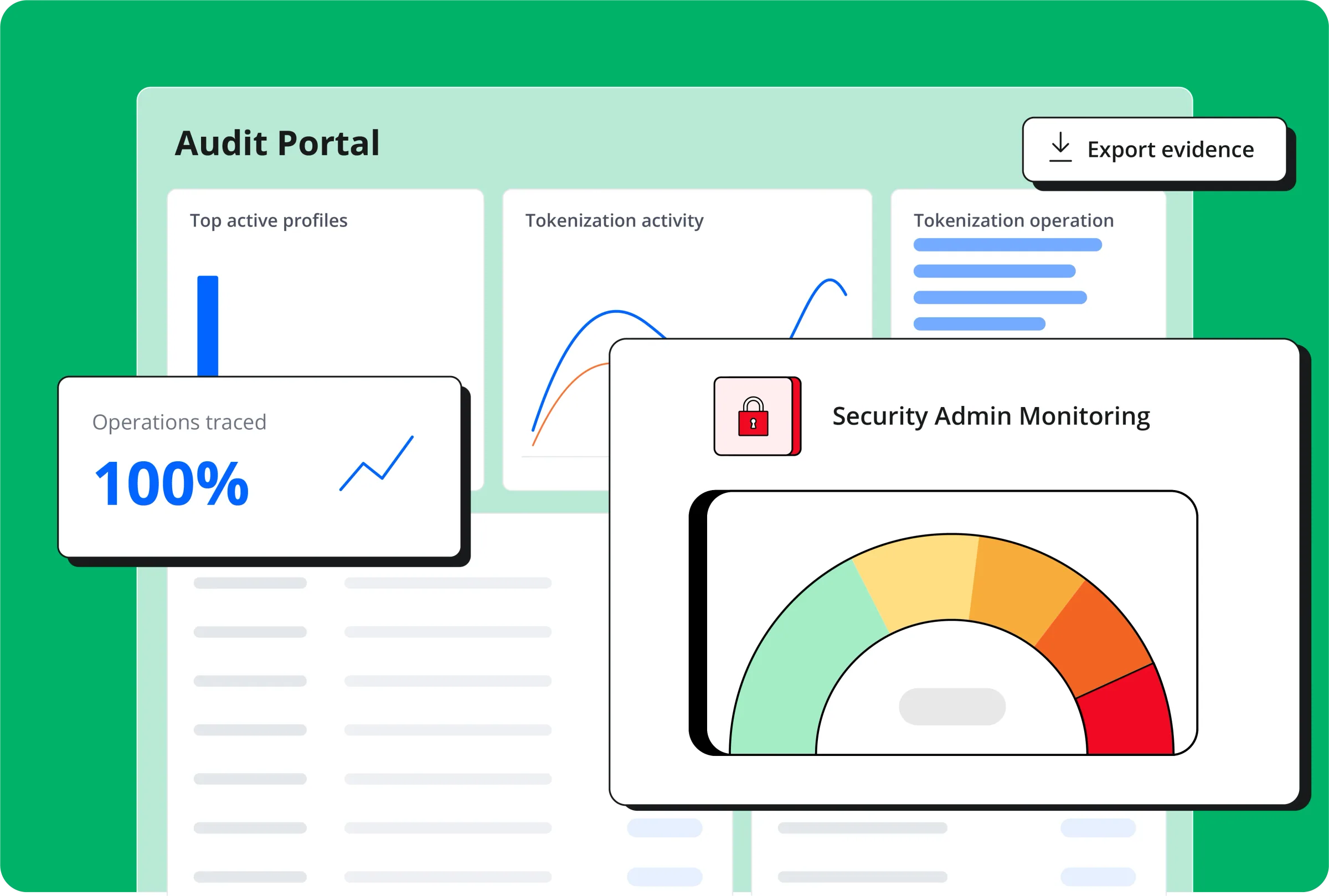
Access events are recorded as pipelines run, so the record parliamentary and regulatory review need already exists.
Quality checks at national scale
National-scale systems process source data volumes most platforms are never tested against. Bluemetrix enforces quality rules at ingestion across large numbers of source systems, so bad records are caught before they reach national-scale reporting.
Tokenization that still lets agencies share
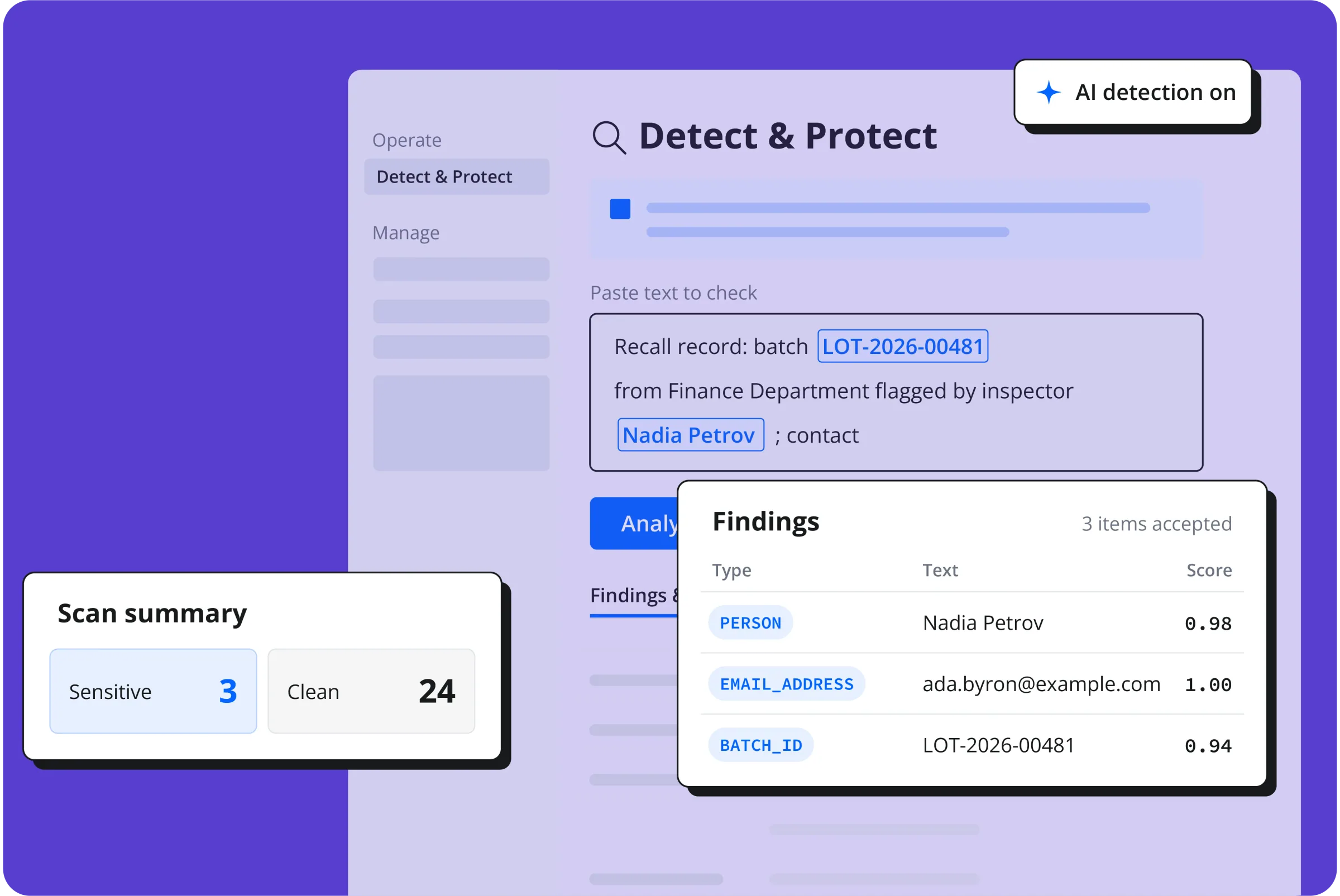
Citizen identifiers are tokenized at collection using the same profile everywhere, so equivalent values produce the same token across every agency. Records still join for cross-agency work without exposing the underlying value.
A record built for parliamentary review
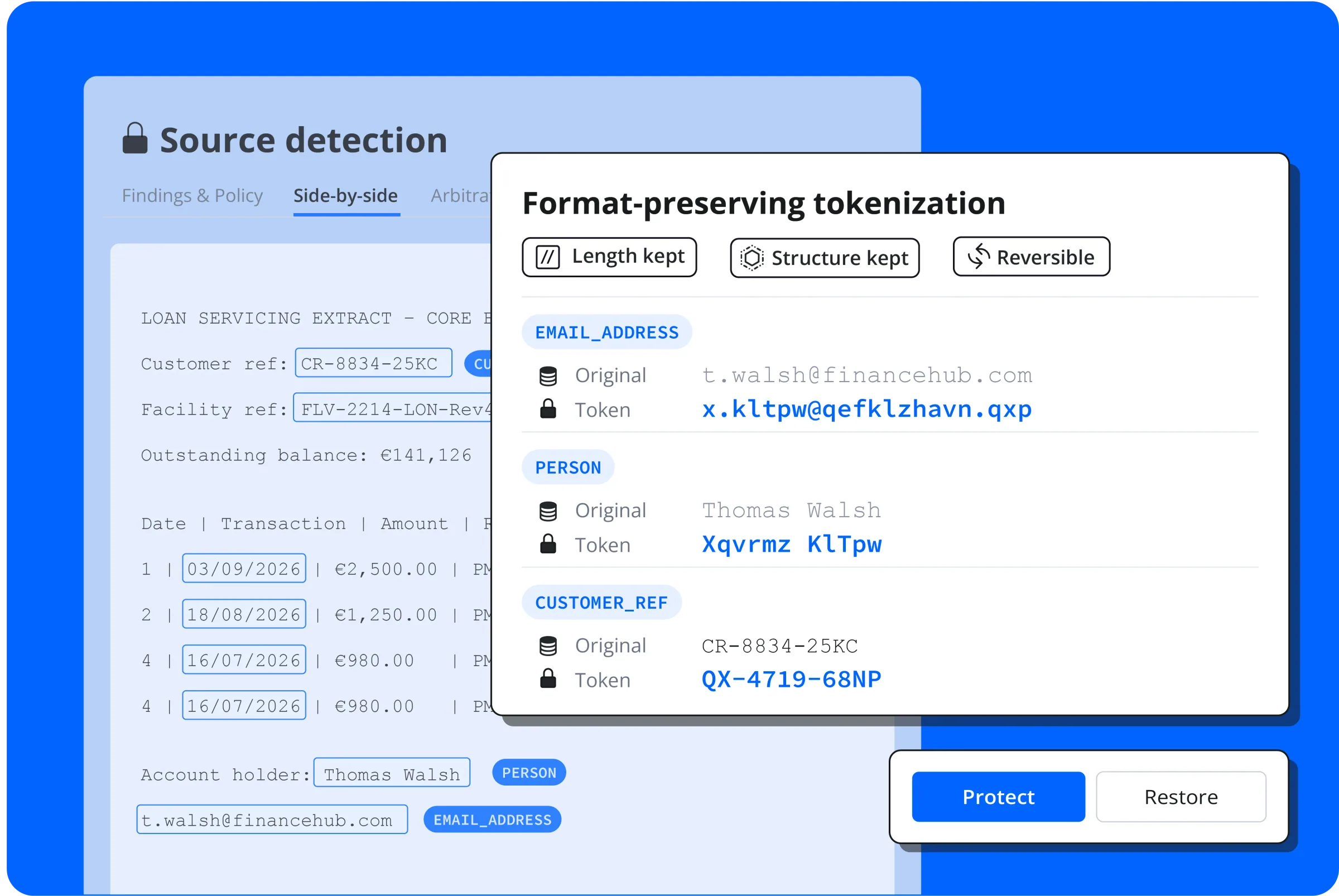
Access events are recorded as pipelines run, producing the audit trail parliamentary, regulatory and internal review expect -- legible enough for a non-technical reviewer, not just a compliance team.
Learn more about Bluemetrix
Common questions
01
Can this stay within our sovereignty boundary?
Yes. It deploys on-premises or in sovereign cloud, platform agnostic, with no third-party service required to function.
02
Does tokenization support cross-agency sharing?
Yes. Equivalent values tokenize identically under the same profile, so records still join across agencies without exposing the underlying value.
03
Does SecureToken require a token vault?
No. Tokens are generated deterministically from the value and a policy, so there is no vault to scale or protect as a single point of failure.
04
How is access to citizen data controlled?
Detokenization is scoped to identity and policy. Recovering a real value is an explicit, logged authorisation rather than a default outcome of access.
05
Can this scale to national data volumes?
Quality rules are enforced at ingestion across large numbers of source systems, so bad records are caught before they reach national-scale reporting.
06
Is the audit record suitable for parliamentary review?
Yes. Bluemetrix maintains a complete audit record for parliamentary, regulatory and internal review.