Zero Trust Data Protection
Zero Trust should reach the data.
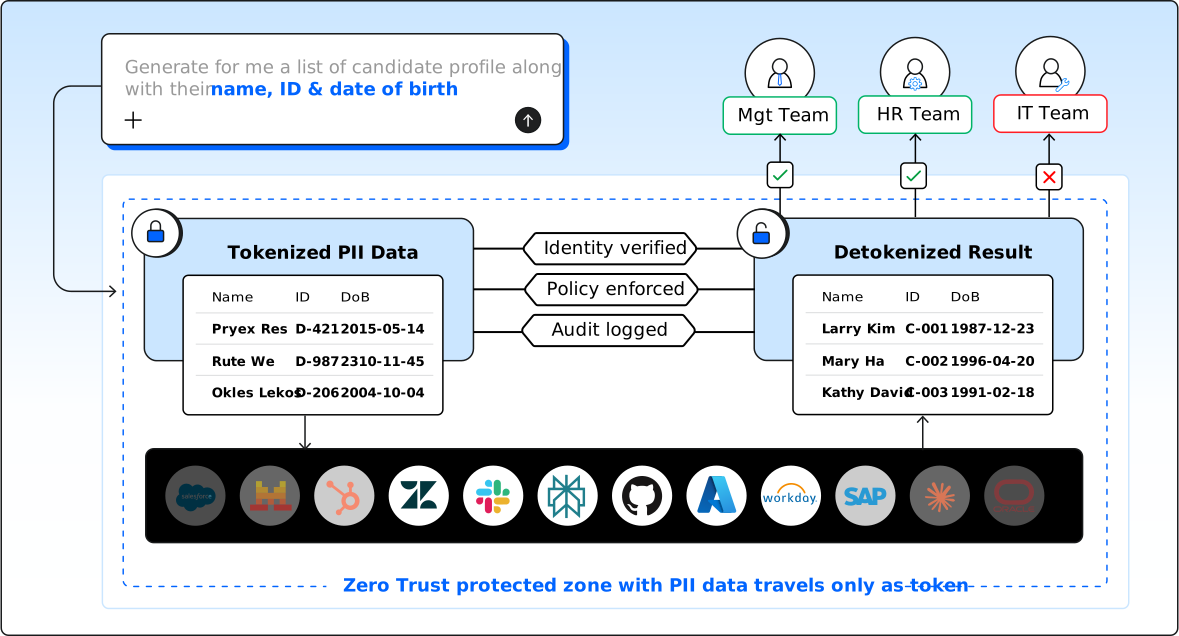
Identity, device and network controls decide who gets in. SecureToken protects the data they reach, replacing protected values with format-preserving tokens until an authorised workflow needs clear text.
Talk to us








The Zero Trust gap
Access can be verified. The data can still be exposed.
Zero Trust verifies identities, devices and connections. Once access is approved, the application can still return the underlying clear-text data. SecureToken extends the control from who can access the system to what data the system reveals.
Authorised access ≠ unrestricted data
A valid session should reveal only the information required for the task.
AI creates another path to the data
Agents, prompts, retrieval systems and models can move protected values beyond the application controls that approved the request.
A compromised application can expose everything behind it
Access controls protect the route. SecureToken protects the values at the destination.
Zero Trust needs a control that stays with the data.
How Bluemetrix SecureToken Helps
The Zero Trust principles, applied at the data layer.
SecureToken keeps protected data tokenized across applications and workflows. Identity and policy determine when a value can return as clear text.
01 · VERIFY EXPLICITLY
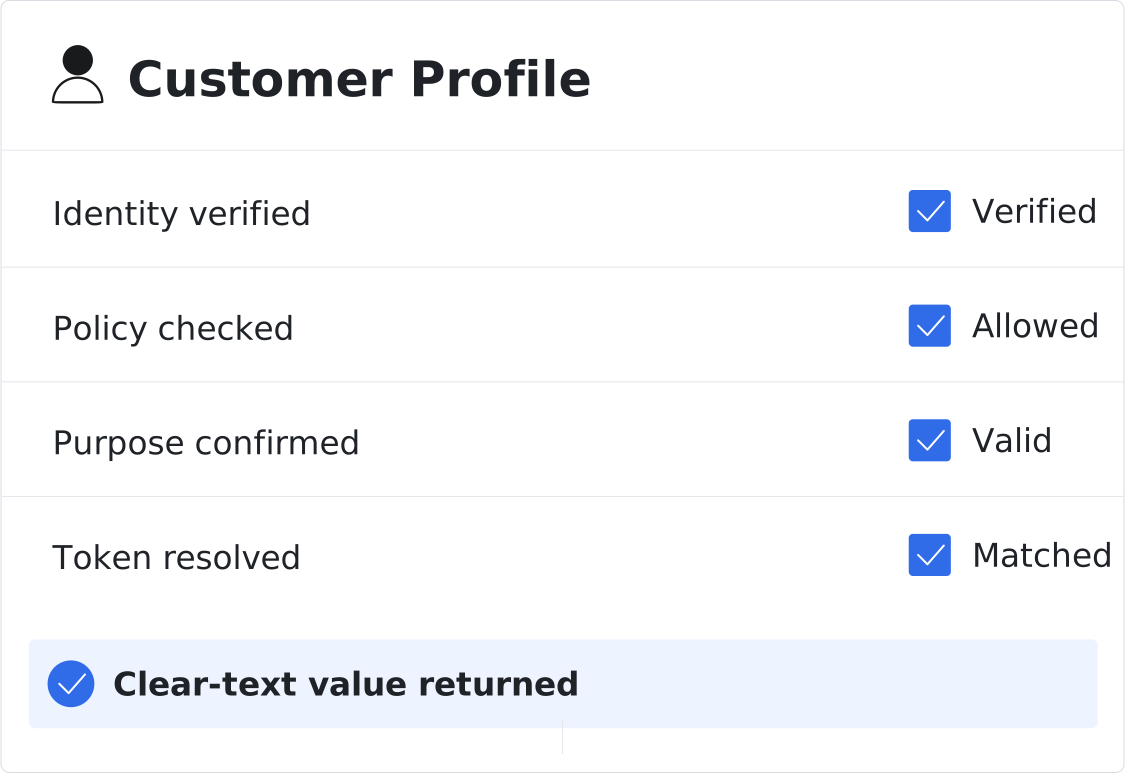
Verify every reveal.
Tokenized values remain protected through applications and workflows. Detokenization occurs only through an authenticated, authorised request governed by policy.
02 · LEAST PRIVILEGE
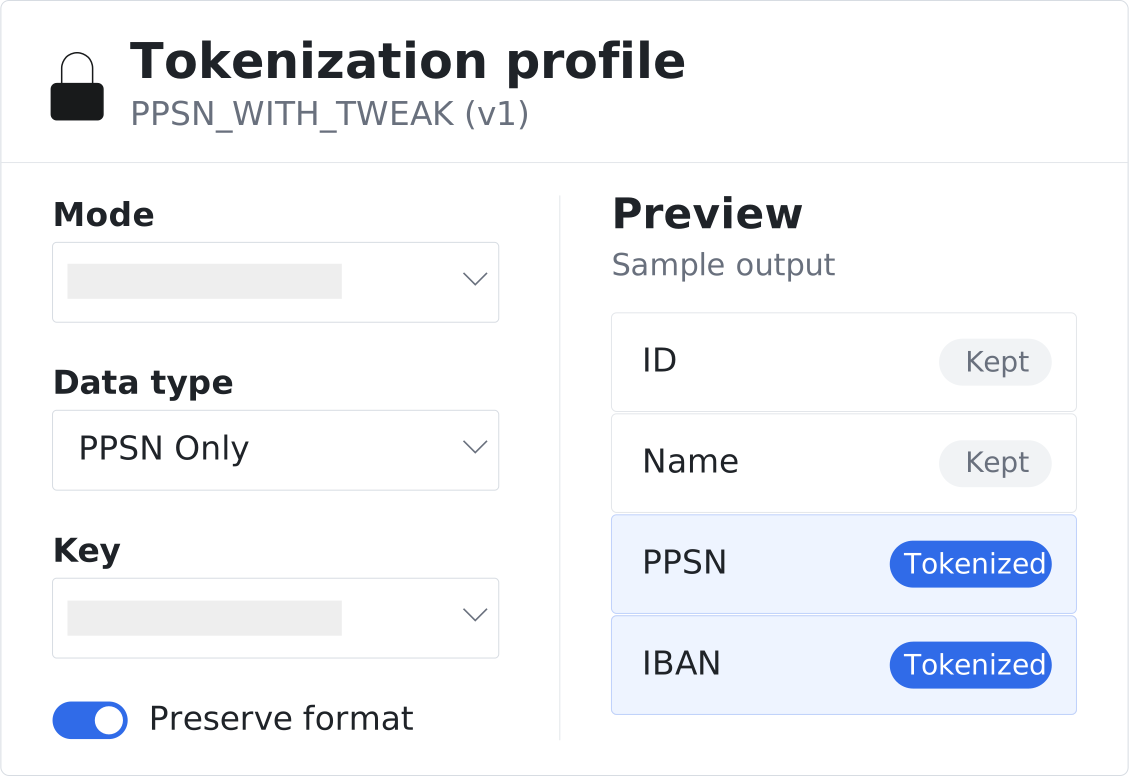
Reveal only what the task needs.
Role and policy controls determine which protected values can return as clear text. Other fields remain tokenized, reducing unnecessary exposure.
03 · DATA-LEVEL ENFORCEMENT
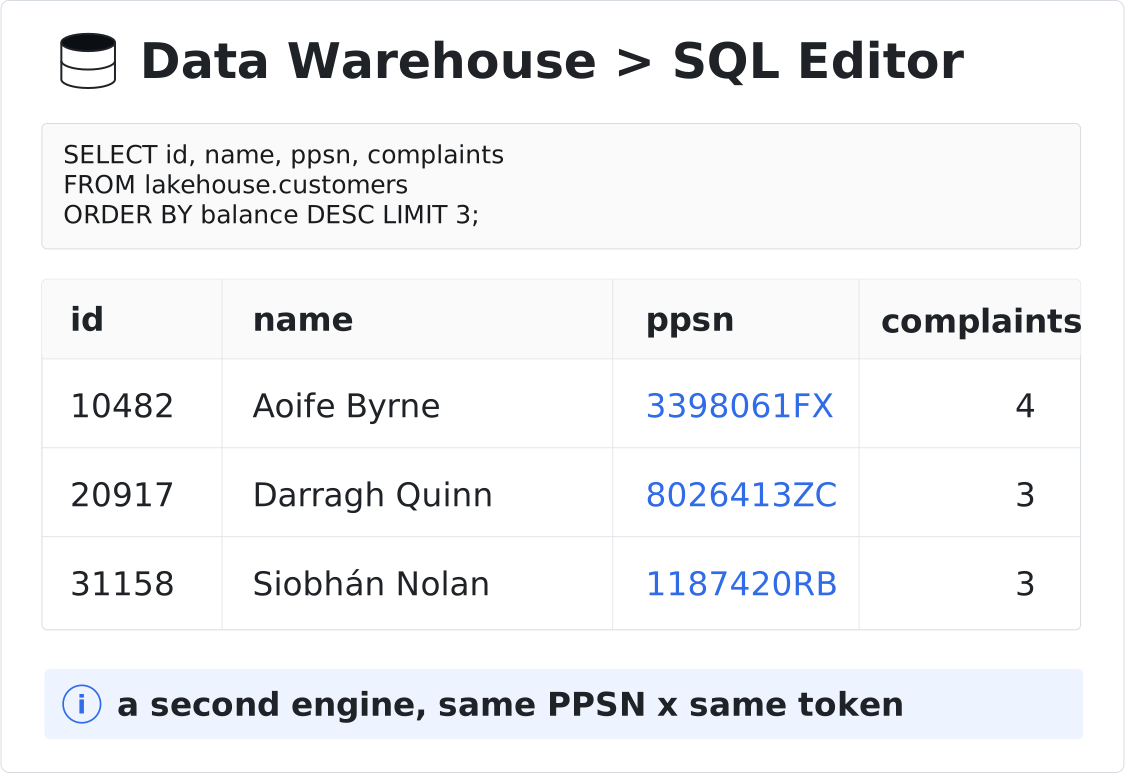
Protection travels with the data.
Tokenization persists as data moves between databases, applications, analytics platforms and AI services. Protection no longer depends solely on the boundary around each system.
04 · CONTINUOUS VALIDATION
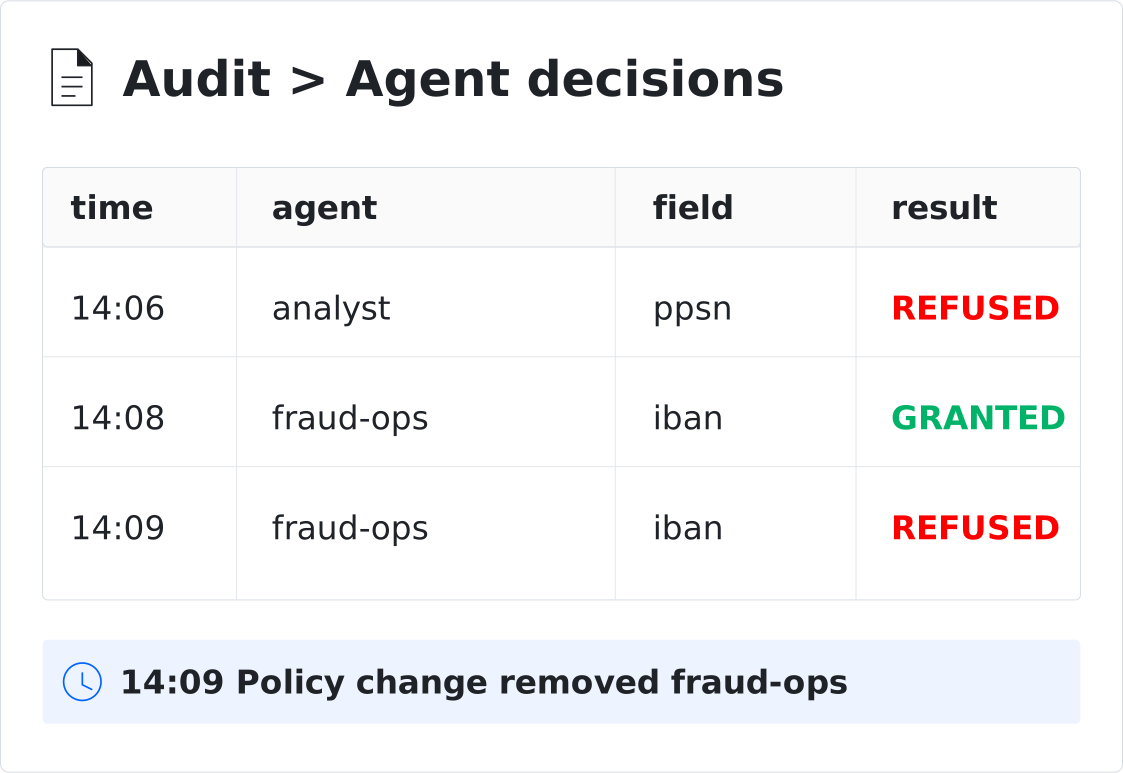
Keep every reveal accountable.
Tokenization and detokenization events can be associated with identity, policy and activity records, supporting monitoring, investigation and compliance reporting.
One data control. Across the stack.
Zero Trust around the data. SecureToken on the data.
SecureToken adds persistent data protection to the security controls already surrounding your applications, platforms and AI workflows.
Protect the data even when the system is breached.
Clear text lives in fewer places, so every system an attacker reaches holds less of value.
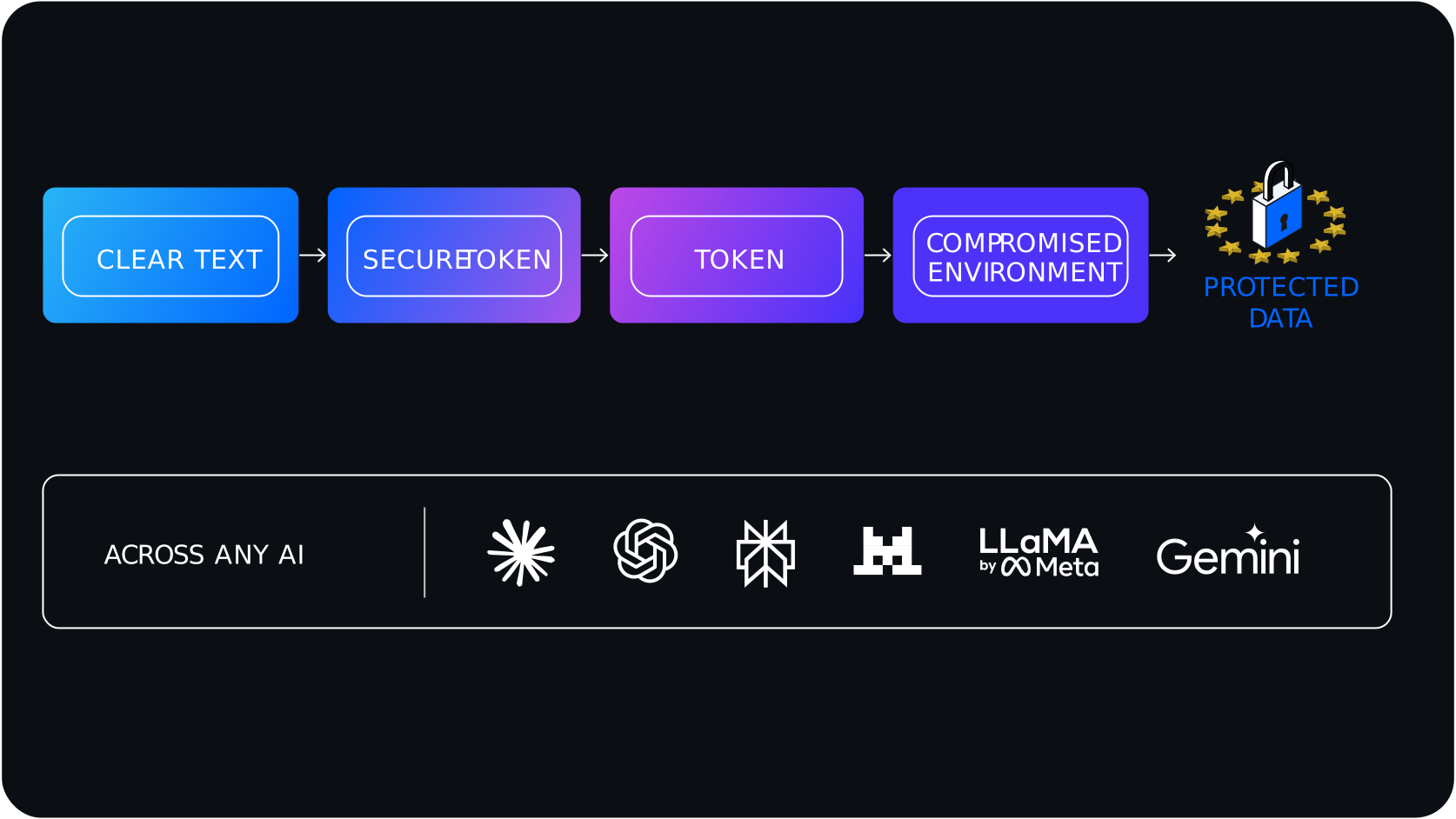
Clear text
Raw values sit in the database, ready to be read.
SecureToken
Every write passes through tokenization first.
Token
Downstream systems only ever see the token.
Compromised environment
A breach exposes the environment, not the data.
Zero Trust for AI
Authorised to act with limited access.
SecureToken tokenizes protected information before it reaches agents and models, then allows approved values to be revealed when an authorised workflow needs them.
Before
After
Protect before the model
PII and other protected values are tokenized before transmission.
Preserve workflow context
Format-preserving tokens retain the structure downstream systems need.
Reveal on return
Authorised workflows can detokenize approved values after model processing.
Audit the interaction
Protection events create an attributable record for monitoring and compliance.
Work with what you already run
Fits the stack you already run.
Connect data protection to the identity, posture and monitoring tools already making decisions, the platforms where that data lands, and the models that process it.
 Tokenize sensitive fields as data moves through Cloudera pipelines.
 Protect regulated values without breaking downstream notebooks or jobs.
 Keep queries and joins working on deterministic, format-preserving tokens.
 Apply the same tokenization policy to data landing in AWS.
 Apply format-preserving tokenization to Teradata Vantage pipelines.
 Keep tokenized fields visible to governance and cataloguing tools.

Zero Trust you can evidence
Turn compliance into enforceable controls.
Zero Trust becomes easier to demonstrate when protection, policy decisions and authorised data reveals produce a consistent record across the data lifecycle. The same tokenized control supports every framework below.
CCPA / CPRA
The California Consumer Privacy Act, amended by the CPRA, gives California residents rights over the personal information that businesses hold. Cybersecurity audit and risk assessment rules phase in from 2026.
Read CCPA blog
DORA
The Digital Operational Resilience Act has applied to EU financial entities since January 2025. It covers ICT risk management, incident reporting, resilience testing and third-party risk for every entity in scope.
Read DORA blog
GDPR
The General Data Protection Regulation is the EU regulation on processing the personal data of people in the EU. Fines reach up to 4% of global annual turnover for organisations in scope.
Read GDPR blog
NIS2
NIS2 is the EU directive that raises the cybersecurity baseline for essential and important entities across 18 sectors. Each EU member state transposes the directive into its own national law.
Read NIS2 blog
POPIA
South Africa's Protection of Personal Information Act has been fully in force since July 2021, and the Information Regulator enforces it. It requires security safeguards for the personal information that organisations hold.
Get POPIA solution brief
Saudi Arabia PDPL
The Personal Data Protection Law is overseen by SDAIA and has been enforced since September 2024. It covers the processing, security and cross-border transfer of personal data in Saudi Arabia.
Read Saudi Arabia PDPL blogCISA Zero Trust Maturity Model
The US Cybersecurity and Infrastructure Security Agency's maturity model sets out five pillars for Zero Trust adoption, with Data as a dedicated pillar in its own right.
Contact us
BCBS 239
BCBS 239 sets out the Basel Committee's 14 principles for risk data aggregation and risk reporting. Global and domestic systemically important banks carry the expectation to follow all 14 principles.
Contact us
HIPAA
HIPAA is the US law that protects health information held by covered entities and their business associates. Its Privacy and Security Rules set standards for access, audit and disclosure of that information.
Read HIPAA blog
NIST
NIST is the US National Institute of Standards and Technology. It publishes the Cybersecurity Framework (CSF 2.0) and the SP 800-53 control catalogue, which organisations well beyond the US adopt as a security baseline.
Read NIST blog
Custom frameworks
Internal control frameworks, group policies and sector rules sit on top of regulation. Each organisation combines these layers into its own set of requirements for the data in its test environments.
Contact usZero Trust data protection FAQs
Answers on where SecureToken fits in a Zero Trust architecture.
SecureToken adds a data-protection layer to an existing Zero Trust architecture. IAM, ZTNA and related controls determine identity, access and path. SecureToken determines whether protected values remain tokenized or can be revealed to an authorised workflow.
No. SecureToken complements them. Identity systems provide authentication and role context, DLP monitors data movement, DSPM identifies exposure and posture, and SecureToken protects the data itself through tokenization.
Applications and users can operate on tokenized values by default. Policies determine when specific protected values can be detokenized for an authorised role or workflow, limiting unnecessary access to clear text.
Where applications operate on tokens instead of underlying protected values, compromising that environment exposes tokenized values rather than the original data. This helps reduce the useful data available to an attacker.
Yes. Protected values can be tokenized before prompts, retrieval results or tool responses reach an AI model. Approved values can then be detokenized for an authorised user or downstream workflow.
SecureToken uses deterministic, format-preserving tokenization where appropriate, allowing protected values to retain consistent relationships and usable structures for analytical and operational workflows.